

A recent story in the New York Times lamented irreparable damage to the ‘Witness’ Tree outside of Abraham Lincoln’s former home, part of the Lincoln Home National Historic Site in Springfield, Illinois.
What is a Witness Tree?
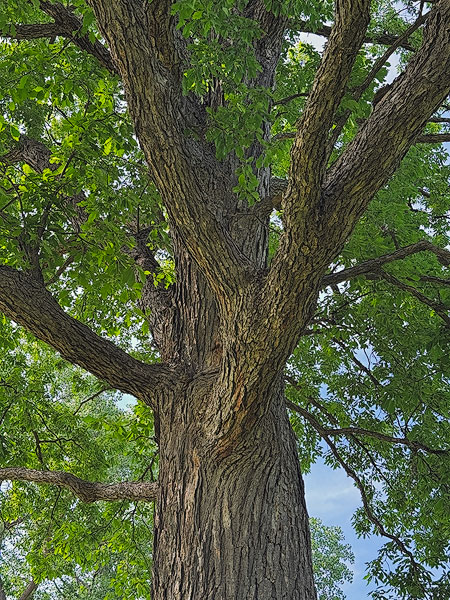
They are trees that were present during a grand historical or cultural event in America. The trees got their name because they could “witness” a historically significant event. Witness trees are centuries old and are known to be of great importance to the history of the U.S. nation.
Similar to a previous post on “Our Oldest Journalist,” the Lincoln Witness Tree isn’t necessarily revered for its ecological benefits, canopy coverage, or as an ornamental landscape feature — it is valued because it is a living connection to history, otherwise known only through photographs or other historical documents. A living thing you can actually touch that Abraham Lincoln likely touched. A testament to the preservation of such increasingly rare, living recorders of natural history.
The NYT piece states:
The significance of a natural connection to the past can bridge the gap between eras more than a plaque or a statue, said Kate Masur, a professor of history at Northwestern University, who has studied Lincoln.
“These are kind of natural monuments,” Professor Masur said. “I find it really powerful to be in the presence of these trees that were alive at that time, maybe, in part, because they’re living things.”
We often celebrate the planting of trees, but the trees that most powerfully connect us to our communities are often the ones planted generations ago. Witness trees remind us that some trees become more than trees. They become living historical monuments, like our very own Sterling Oak and so many others.
Gift Link🎁: Lincoln historic Witness Tree damaged
The concept is based on asking the question, “What if our oldest trees could testify?”
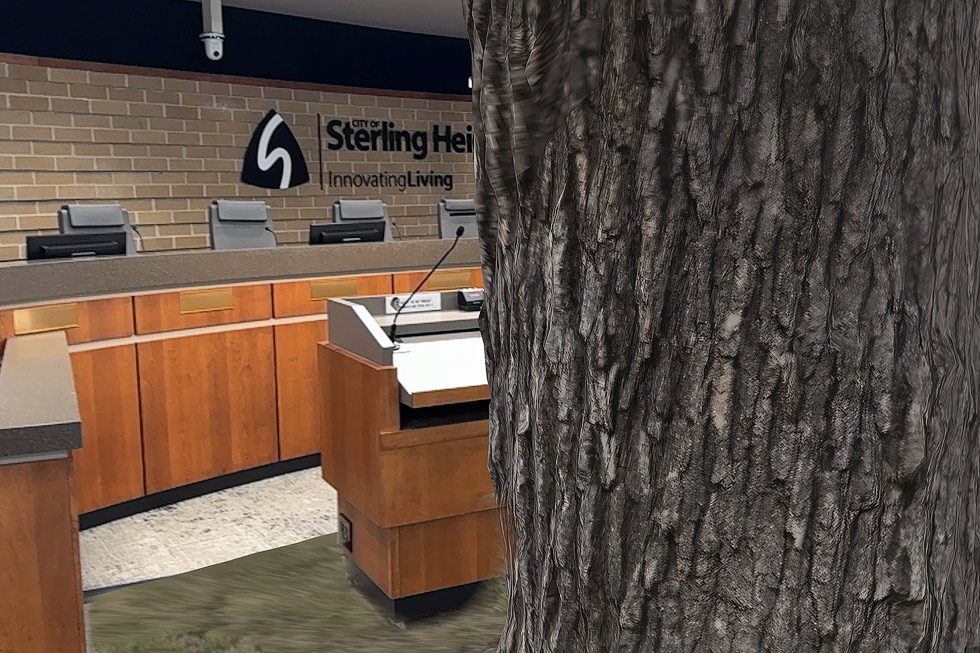
This photo is the result of a 2026 lidar scan (although primitive) of the centuries-old Sterling Oak tree in Sterling Heights, Michigan, which creates a 3D point model that can then be used in augmented reality features of many smartphones these days, creating a life-size superimposed version in any environment you point your camera at. (Similar to how you see items on Amazon with an option to see how a product looks in your own room.)
It might need more than 3 minutes to speak. 😉
Leave a Reply